
Church Royalties: The Money Every Christian Artist Is Leaving on the Table
If you’re a Christian artist, this has probably happened to you: someone sends you a Sunday service video of a church congregation singing your song. You get chills. Then you think — did I get paid for that?
Almost always, the answer is no. Not because the church is cheating — they’re paying their license — but because your song was never registered in the catalog that collects that money. Until now.
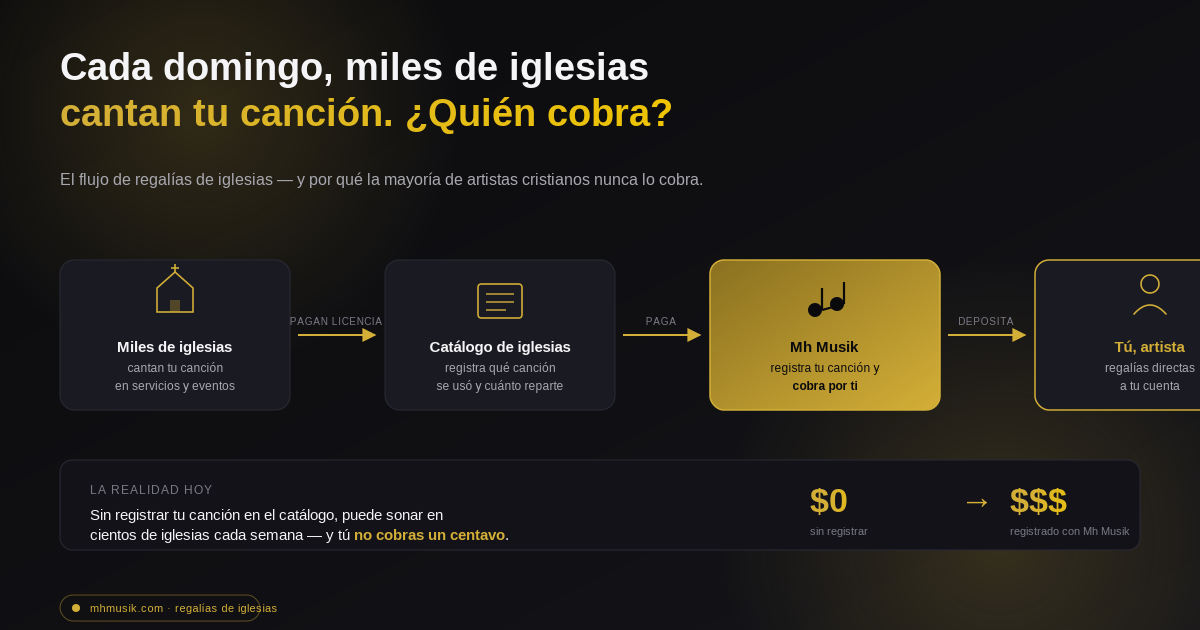
How church money actually flows
In the US and in dozens of other countries, churches can’t legally project lyrics, print bulletins, or livestream services using copyrighted songs without paying an annual license. Collectively they pay millions a year for these licenses.
The flow is straightforward:
- The church pays an annual fee based on its average attendance.
- Twice a year, the church reports which songs it used (projection, worship, streaming, bulletins).
- The royalties get distributed to the copyright holders of each reported song.
The catch: only registered songs get paid. If your song isn’t in the catalog, the reports may mention it, but the money never lands in your account. It stays in the pool.
Why most Christian artists never collect
Church-catalog registration was never part of what a normal distributor sells you. DistroKid, TuneCore, CD Baby — none of them register you. They push your music to Spotify and YouTube Music, take their cut, and church royalties sit entirely outside that package.
The result: Christian artists with thousands of churches singing their songs each week, earning zero from that usage. Not because it’s illegal — because nobody registered them.
What changes today with Mh Musik
Starting now, any Christian artist can register their songs in the church catalog through Mh Musik. The service is open to everyone — whether or not you’re on a VIP plan.
That said: if you can afford it, the VIP Gospel plan is by far the smarter move. It includes unlimited registrations at no extra cost, while outside the Gospel plan each registration carries a per-song fee. If you have a medium or large catalog, the Gospel plan pays for itself with your first few registrations — and on top of that comes everything else the plan includes (Dove Awards submissions, free BMI + SoundExchange setup, 100% streaming royalties, and more).
On top of whatever you collect, we keep a very small commission — the same rate as our publishing administration: 1% if you’re VIP, 10% if you’re not. The rest is yours. Compare that to the 15% a typical administrator charges or the 20–50% of a major publisher.
There’s real volume here. A song that reaches the top of what churches are singing in the US can generate thousands of dollars in semiannual royalties, plus related income (service streaming, print, broadcast). This isn’t a token upside — it’s a revenue line no independent Christian artist should be ignoring.
How to register your songs
The flow lives inside the artist panel:
- Log in to your account at app.mhmusik.com.
- In the sidebar menu, right below Registrar Publishing, you’ll find the new item: “Colectar Regalías de Iglesias”.
- Fill in the details for each song you want added to the catalog.
- We process the registration and start collecting on your behalf.
After that, you wait for the reporting cycles. Money drops into your artist account as churches report your songs.
The bigger point
Mh Musik exists to collect the royalties independent artists quietly lose — US tax withholding, SoundExchange, publishing. Church royalties were the last big missing piece in the Christian market, and now it’s live.
If you have Christian music out there — even if it’s years old, even if it’s with another distributor — create your account and register it through the church form. That money is already being paid by the churches. All that’s left is telling them who to send it to.